Who really won Iraq’s elections?
 29 December 2025
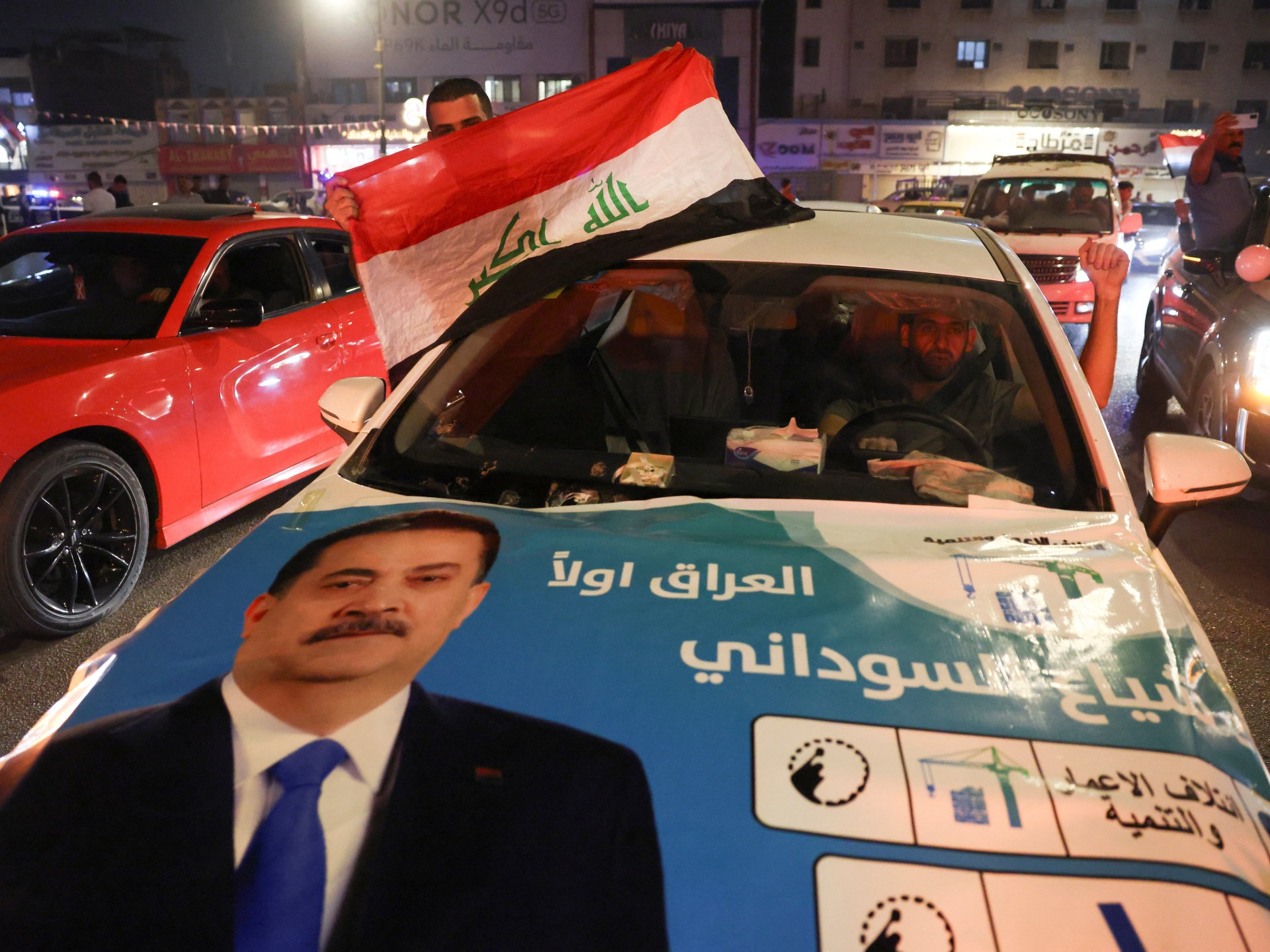

Baghdad, Iraq – Iraq’s new parliament is holding its first sitting on Monday, a closely anticipated event as post-election Iraq grapples with the question of who sits in parliament and who will lead the next government.
Who will be the prime minister is only one issue, although it is top of mind for incumbent Prime Minister Mohammed Shia al-Sudani, who had his powers clipped in November by the Federal Supreme Court (FSC), making his government a caretaker.
As he scrambles for new alliances to compensate for a fractured electoral bloc, al-Sudani will also need to prove he can steer the country through a complicated domestic and international position.
Return to the Framework
According to a source in al-Sudani’s Reconstruction and Development Coalition (RDC), he wanted to use the time between election day and the new parliament’s first session to build negotiating momentum.
He tried to create his political base through an independent electoral list – and won big with about 46 out of 329 seats – but the FSC ruling sent him back to the Shia Coordination Framework (SCF), the alliance that nominated him four years ago and that he was trying to break free from.
Now, he loses the advantage of his RDC’s win and must submit to the SCF leadership, many of whom do not hold seats in parliament, operating instead as external powerbrokers.
Whether it chooses al-Sudani or someone else for the premiership, the SCF’s biggest task is figuring out how to deal with the traditional Shia parties losing ground in this election, while Shia parties with armed wings won big.
Advertisement
Armed groups have long been members of the SCF and played a role in Iraq, but pro-Iran, anti-West armed groups have never had such a large presence and voice in parliament.
This is not only problematic for the powers Iraq has relations with, but also for a swath of Shia Iraqis unhappy with the outsized influence Iran has in their country.
Rise of armed factions
The SCF commands approximately 180 MPs; of these, 80 to 90 belong to groups and armed factions close to Iran – most of them under US sanctions. In 2021, they held only 17 seats.
In al-Sudani’s bloc, 10 seats went to Popular Mobilisation Forces (PMF) head, Faleh al-Fayyad, and eight to Minister of Labour Ahmed al-Asadi, who also leads the Jund al-Imam brigades, an armed faction within the PMF.
This expanded presence of anti-Western, pro-Iran armed groups in the government formation process puts Iraq on a potential collision course with the European Union, Gulf states, the United Kingdom, and the United States.

According to Iraqi Foreign Minister Fuad Hussein, the US has conveyed a message to Iraqi leaders that it will not accept these factions, many of which have long operated as state-salaried entities with political wings, taking positions in the government.
The US previously adopted an unstated policy of “non-engagement” with officials from armed factions, refusing to engage with them, while maintaining normal relations with the rest of the cabinet.
Washington’s engagement with the next government will depend entirely on the extent of these factions’ representation, a matter still awaiting resolution.
Yet, it remains to be seen whether the US will limit itself to further sanctions on individuals or if it will escalate to crippling measures that could paralyse the Iraqi state, such as sanctioning the State Oil Marketing Organisation (SOMO) or restricting Baghdad’s access to US Federal Reserve funds.
Many of the kingmakers in the government formation process have already been sanctioned by the US, including PMF chief al-Fayyad, Asaib Ahl al-Haq leader Qais al-Khazali and Khadamat leader Shibl al-Zaidi.
Government formation negotiations
When parliament convenes, members will be sworn in, and the speaker of parliament will be selected. This person is a consensus Sunni candidate, according to the customary muhasasa system, in place since the first government under the post-2003 constitution.
Following that is the vote for the presidency, a Kurdish candidate, according to muhasasa. The president then nominates the candidate of the largest Shia bloc – the SCF – to be named prime minister.
Advertisement
Before the election, Supreme Judicial Council President Faiq Zaidan urged politicians to adhere to the constitutional timeline for government formation – a maximum of 90 days – and the FSC ratified the results faster than usual.
However, historically, no Iraqi government has ever been formed within constitutional deadlines – in 2021, it took more than 300 days – and the SCF’s struggle to find the right candidate while balancing the visibility of the armed groups now sitting in parliament could prolong the process.
Historically, Iran has played a central role in forging consensus on the prime minister among Shia factions.
But it is weakened regionally now, grappling with the aftermath of Israeli and US attacks, a debilitating economic crisis caused by sanctions, and the degradation of its regional proxies, making Iran’s role this time questionable.
Whether this will change how international powers feel about the big gains that pro-Iran Shia armed groups made in parliament remains to be seen.
Related News
Starvation, ‘ghost towns’ plague Sudan as al-Burhan demands RSF surrender
Zelenskyy, US envoys to resume talks as Ukraine says ready to drop NATO bid
Backlash after CBS pulls 60 Minutes report on Salvadoran mega-prison