10 years after divisive Brexit referendum, UK weighs a ‘Breturn’ to the EU
 20 November 2026

A decade after the narrow vote to leave the EU, the United Kingdom is showing every sign of buyer’s remorse.
For many, the bitterly fought contest over the referendum on whether to leave the EU was unpleasant and divisive.
Recommended Stories
list of 4 items
- list 1 of 4UK seeks closer ties with EU after Brexit fail
- list 2 of 4Andy Burnham says Brexit is what the UK’s ‘enemies’ wanted
- list 3 of 4Britain’s Brexit woes: ‘I didn’t vote to leave in the way that we did’
- list 4 of 4EU and UK agree a reset deal to end ‘decade of drift’
end of list
Couples and families reportedly split over where they stood on the referendum. Each side of the debate – Leave and Remain – became a cipher for how people saw themselves and their country in a changing world.
As the campaign unfolded amid accusations of foreign influence and dirty tricks, the murder of a politician, a debate over economics and political sovereignty, a visceral fight intensified over identity, belonging and competing visions of what it meant to be British.
Critics and pro-Brexit slammed various exit deals that successive governments negotiated with Brussels as somehow a betrayal of what had originally been a binary choice.
The EU, the trading bloc the UK sat uneasily within for nearly half a century, remains the country’s biggest trading partner.
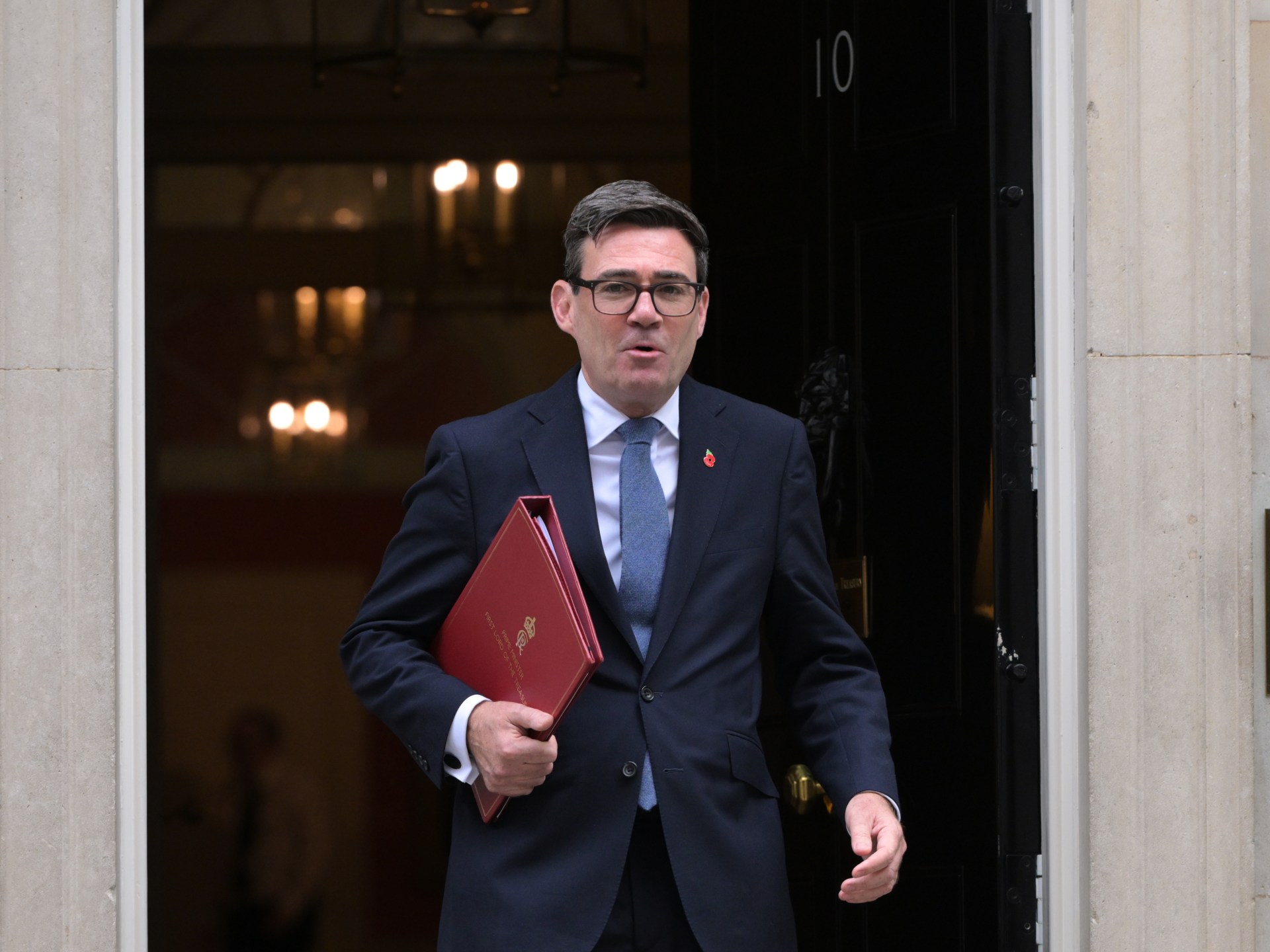
On Friday, in a joint news conference with Ursula von der Leyen, president of the European Commission, following the latest UK-EU summit in Brussels, UK Prime Minister Andy Burnham hailed the first in a series of expected deals with the EU as rebuilding “the bridges that were broken all those years ago”.
The agreements, which cover three main areas – easing trade restrictions, expanding opportunities for young people to live and work across borders, and addressing carbon levies – were characterised by Burnham as “a good deal for Britain” and regarded as first steps towards bringing the UK back into the EU’s orbit.
Does the UK want to rejoin?
Some in the UK believe that leaving the single market and customs union brought little tangible benefit while creating additional paperwork, border checks and barriers to trade with the UK’s largest export market. Others have no regrets about leaving the bloc.
Advertisement
According to polling expert Sir John Curtice, surveys show an average of 62 percent favour rejoining, against 38 percent for staying out, once undecided respondents are excluded.
“Whatever the nuances, the UK public are certainly in a different place on the EU than [they were] in 2016,” he told Al Jazeera.

Could the UK Breturn?
According to some analysts, the government – which is not bound by a single written constitution – could, with the EU’s agreement, begin the process of rejoining without holding another referendum, or even including the commitment in an election manifesto.
However, doing so would inevitably be politically difficult and, according to Professor Curtice, almost certain to be highly unpopular.
“The Brexit referendum in 2016 was not legally binding,” Sionaidh Douglas-Scott, the chair in Law at Queen Mary University of London, wrote by email. “Legally, it could have been ignored altogether. But it was thought to be politically unacceptable to ignore the public’s vote in the referendum. And political parties can ignore their election manifesto pledges at their peril,” she said, referring to parties’ reliance on public trust to support any agenda.
“I suspect Burnham might be tempted to have a referendum on the issue of rejoining the EU, feeling that public opinion had changed sufficiently to render a rejoin vote likely, although that’s by no means certain,” she said. “Some senior members of the [governing Labour] party … clearly feel that rejoining should be a manifesto pledge. So, politically, steps might be taken to make it more acceptable.”
Meanwhile, questions remained over the terms on which the UK might rejoin the bloc, whether it would be required to adopt the euro – a prospect it had previously resisted – and what form the EU itself might take following elections in some of its most influential member states, including France, Germany and Spain.
Polling suggests a distinction between support for closer relations with the EU as opposed to support for full membership.
While some surveys put support for rejoining at about 35 percent when closer ties were offered as an alternative, Curtice said support for closer relations was often less firmly held.
“Much of that support is soft – people say they somewhat support rather than strongly support” closer ties, he explained. By contrast, around half of those supporting rejoining the EU say they “strongly support” it, suggesting a deeper commitment to that option.
Advertisement
Similarly, at home, many of the more prominent figures of the original campaign to leave Europe have resurfaced and appear to be marshalling their forces against any return or realignment.
Reform UK leader Nigel Farage, one of Brexit’s most prominent campaigners, returned to Brussels on Thursday to oppose the prime minister’s efforts.
Other figures associated with the Leave campaign have also re-emerged, including former Prime Minister Boris Johnson and his former cabinet ally, Michael Gove, now a magazine editor. They have revived loosely sourced claims about the financial cost of rejoining the EU – or even of having remained a member. The campaign group Stay Out, for instance, puts the annual cost at 39.3 billion pounds (approximately $51.4bn), equivalent to 750 million pounds (about $982m) a week.
“I think we should think about two things when we think about Brexit and the potential to rejoin: trauma and salience,” Anand Menon, professor at King’s College London and director of UK in a Changing Europe, said. “Some people felt traumatised by the first debate and don’t want to revisit it. At the same time, the issue has lost its salience. The public don’t consider it one of the main issues facing the country,” he said.
“If you cast your mind back to 2016, those supporting Leave, like Nigel Farage, took the EU, which the public never really thought about, and linked it in the public’s mind to something they absolutely did: immigration.
“If Burnham is going to try to get the sort of energy he’ll need to see the process through, he’s going to need to do something similar, though what, I don’t know.”
Related News
Pro-Russian hackers leak Italian foreign minister’s data on dark web

Saudi Arabia intercepts missiles and drones as fighting with Houthis rages
How big is the Republican midterms loss, and is there a silver lining?